Macronutrients: Functions and Sources
Exploring carbohydrates, proteins, and fats—their distinct roles in the body and evidence-based guidance for macronutrient intake.

Understanding Macronutrients
Macronutrients—carbohydrates, proteins, and fats—are nutrients required in substantial quantities that provide energy and serve structural and regulatory functions. Unlike micronutrients (vitamins and minerals), macronutrients contribute calories to the diet: carbohydrates provide 4 calories per gram, proteins 4 calories per gram, and fats 9 calories per gram.
The relative proportions of macronutrients in the diet can vary substantially depending on individual preferences, cultural context, and specific dietary approaches. Despite this variation, adequate intake of all three macronutrient classes is essential for optimal health and function.
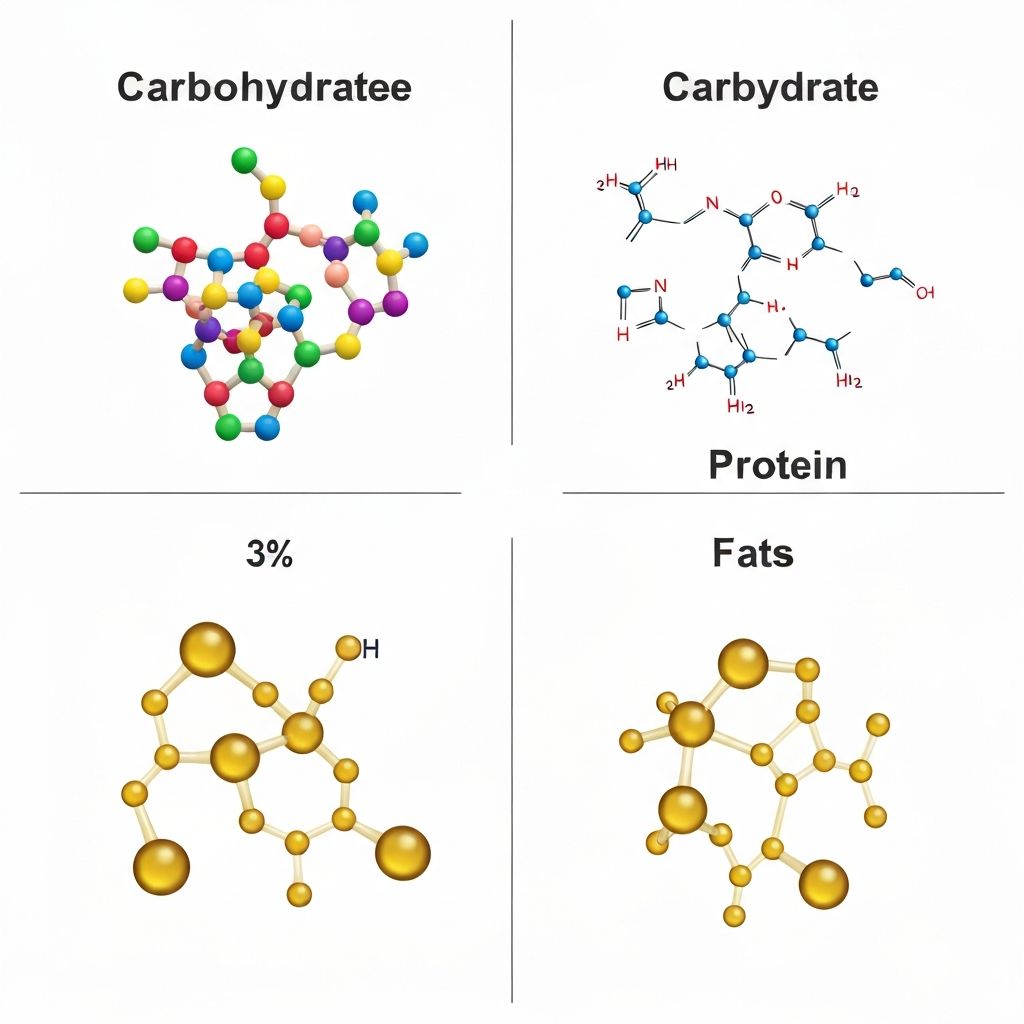
Carbohydrates: Structure and Function
Carbohydrates are organic compounds composed of carbon, hydrogen, and oxygen. They are classified into three main categories: monosaccharides (simple sugars), disaccharides (double sugars), and polysaccharides (complex carbohydrates including starch and fiber).
Functions of Carbohydrates
- Energy provision: Carbohydrates are the body's preferred energy source. They are converted to glucose, which fuels brain function, muscle contraction, and cellular metabolism.
- Glucose regulation: Blood glucose is tightly regulated through hormonal mechanisms (insulin, glucagon). Carbohydrate intake influences blood glucose dynamics.
- Fiber provision: Plant-based carbohydrates include fiber, which supports digestive health, metabolic regulation, and microbiome diversity.
- Central nervous system function: The brain preferentially utilizes glucose for energy, though it can adapt to utilize ketones during prolonged carbohydrate restriction.
Dietary Sources of Carbohydrates
Carbohydrate sources vary in nutrient density and glycemic impact. Refined carbohydrates (white flour, sugar, processed foods) provide calories with minimal micronutrient content. Whole grain carbohydrates (oats, brown rice, whole wheat) provide carbohydrates plus fiber and micronutrients. Legumes combine carbohydrates with protein and fiber. Vegetables and fruits provide carbohydrates with vitamins, minerals, and phytonutrients.
Proteins: Essential for Body Structure and Function
Proteins are composed of amino acids—organic compounds containing nitrogen. Twenty amino acids are relevant in human nutrition, of which nine are considered "essential," meaning the body cannot synthesize them and they must be obtained from food. The remaining eleven amino acids can be synthesized by the body.
Dietary proteins are broken down during digestion into individual amino acids, which are then absorbed and reassembled into body proteins or utilized for various metabolic functions.
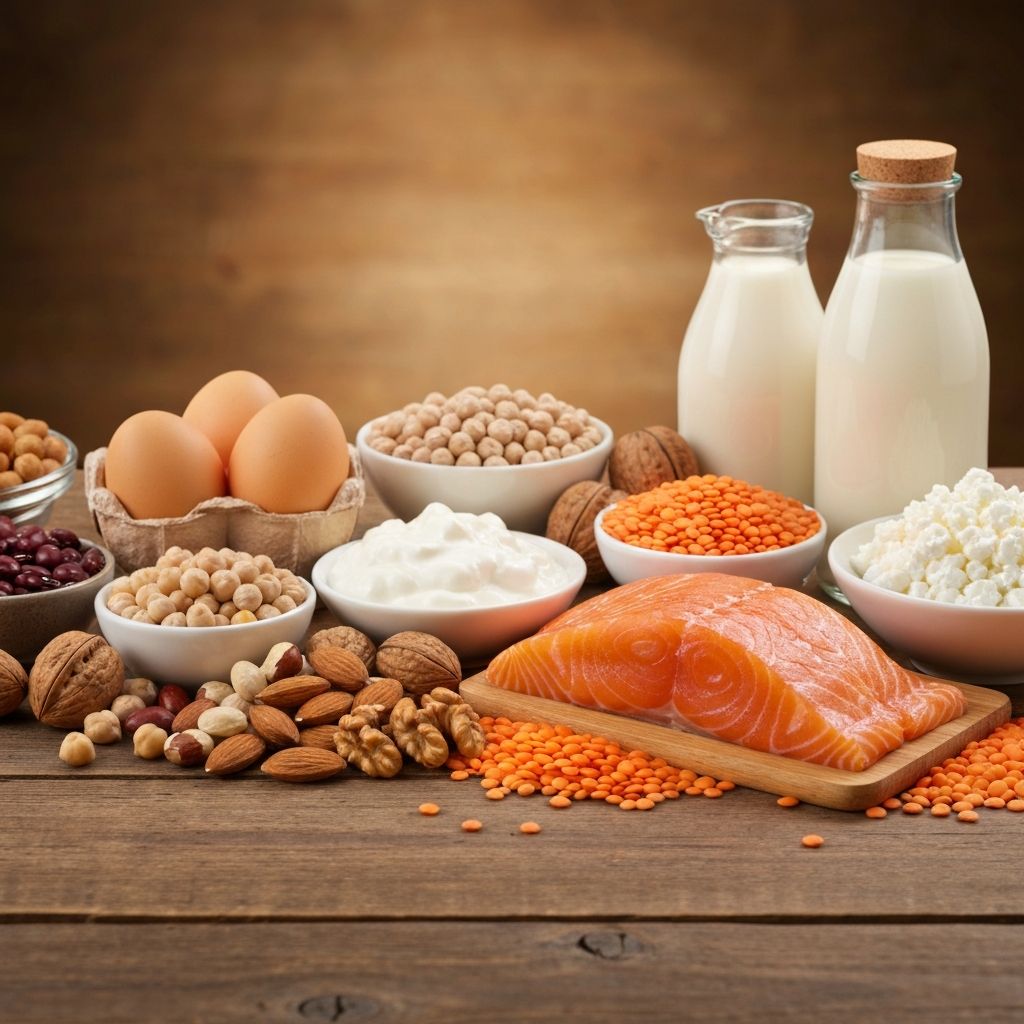
Functions and Sources of Protein
Functions of Protein
- Muscle and tissue structure: Proteins are essential for building and maintaining muscle tissue, bone, skin, hair, and connective tissues.
- Enzymatic function: Proteins function as enzymes, facilitating countless biochemical reactions throughout the body.
- Hormonal function: Many hormones (insulin, growth hormone, cortisol) are proteins or derived from amino acids.
- Immune function: Antibodies and immune cells are proteins essential for defending against infection and disease.
- Transport function: Proteins transport oxygen (hemoglobin), cholesterol, vitamins, and minerals throughout the body.
- Satiety and appetite regulation: Protein intake influences hunger hormones (ghrelin, peptide YY) and typically produces greater satiety than carbohydrates or fats.
Dietary Protein Sources
Animal-based sources: Meat, poultry, fish, eggs, and dairy products provide complete proteins containing all essential amino acids. These sources also provide vitamin B12, iron, zinc, and other micronutrients (though saturated fat content varies).
Plant-based sources: Legumes (beans, lentils, peas), nuts, seeds, and whole grains provide protein but often lack one or more essential amino acids individually. Combining diverse plant protein sources throughout the day ensures adequate essential amino acid intake.
Fats: Essential and Misunderstood
Dietary fats are essential nutrients despite often being mischaracterized. Fats are composed of fatty acids—chains of carbon atoms with hydrogen and oxygen. Fatty acids are classified by their degree of saturation (saturated, monounsaturated, polyunsaturated) and chain length (short, medium, long chain).
Fats serve numerous critical functions and are not simply stored energy. They are essential structural components of cell membranes, enable absorption of fat-soluble vitamins, provide signaling molecules crucial for health, and support brain function.

Functions and Sources of Fat
Functions of Fat
- Cell membrane structure: Phospholipids (a type of fat) are fundamental components of every cell membrane, essential for cell integrity and function.
- Fat-soluble vitamin absorption: Vitamins A, D, E, and K are fat-soluble and require dietary fat for absorption and utilization.
- Hormone production: Cholesterol (synthesized by the body or obtained from food) is the precursor for sex hormones, cortisol, and other essential hormones.
- Brain function: The brain is approximately 60% fat by dry weight. Omega-3 and omega-6 fatty acids are essential for neural function and development.
- Satiety and appetite regulation: Fat intake influences satiety, energy density of foods, and appetite-regulating hormones.
- Energy provision: Fat provides concentrated energy (9 calories per gram) and can be mobilized during periods of caloric deficit.
Dietary Fat Sources
Saturated fats: Meat, full-fat dairy, coconut oil, and palm oil. Once associated with cardiovascular risk, current evidence suggests context (caloric intake, overall diet quality) matters more than saturated fat alone.
Monounsaturated fats: Olive oil, avocados, nuts, and seeds. Often associated with cardiovascular health, particularly in Mediterranean dietary patterns.
Polyunsaturated fats: Fish, fish oils, and vegetable oils. Include omega-3 fatty acids (fish, flax, chia) and omega-6 fatty acids (vegetable oils, nuts). Balance between omega-3 and omega-6 may influence inflammatory status.
Macronutrient Proportions and Individual Variation
While recommended proportions provide guidance, optimal macronutrient distribution varies between individuals. Factors influencing preference and response include genetics, activity level, satiety response, blood glucose regulation, and food preferences.
Some individuals thrive with higher carbohydrate intakes (particularly athletes performing high-intensity activity). Others report better satiety, appetite control, or metabolic function with higher protein or fat intakes. Diverse dietary approaches—Mediterranean, low-carbohydrate, plant-based, DASH—encompass varying macronutrient distributions and can be nutritionally complete and health-promoting.
The key principle is that all three macronutrients are essential, and adequate intake of all three is necessary for optimal health, regardless of the proportions chosen.